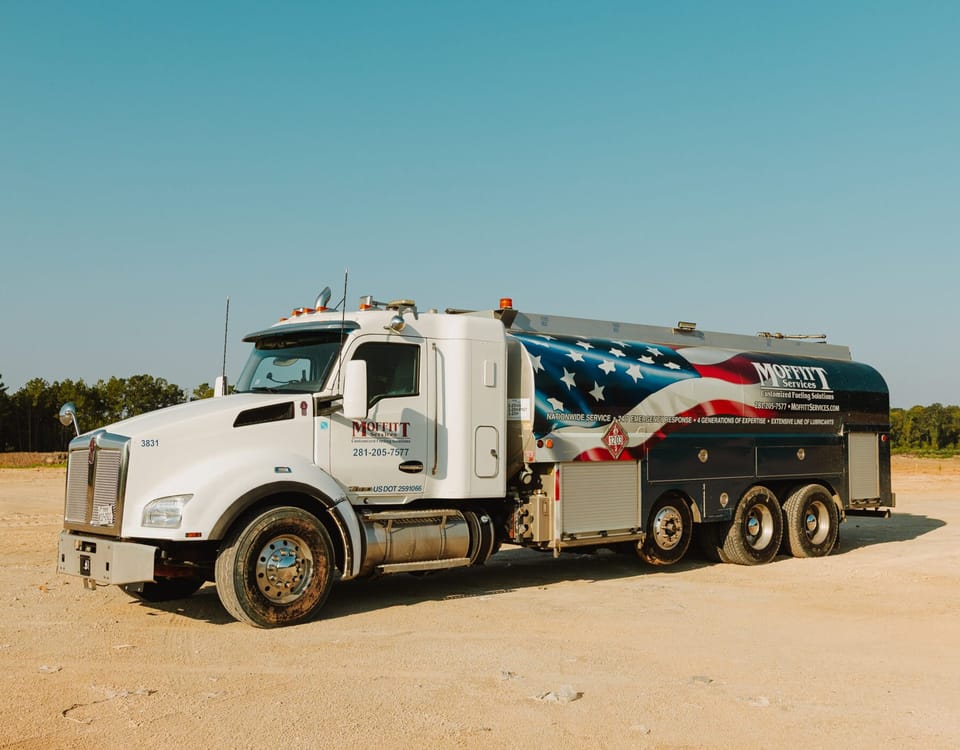

For a Chief Financial Officer or a Senior Project Manager, the true cost of fuel rarely appears on a vendor invoice. While procurement teams often fixate on the price per gallon, this narrow focus ignores the massive, hidden drain on a project’s bottom line: labor downtime. On high-volume job sites, the method you choose to get fuel into your equipment determines whether your operators spend their time moving dirt or moving toward a tank.
To optimize operational efficiency, leadership must shift the conversation from “price per gallon” to “productivity per hour.” This requires a rigorous comparison between on-site bulk storage and the streamlined alternative: mobile refueling.
The Hidden Costs of Bulk Storage
Many project managers default to bulk storage tanks because the upfront cost per gallon appears lower. However, this traditional model carries significant “soft cost” burdens that erode profit margins.
When you utilize bulk storage, you essentially create a bottleneck. Operators must stop their machines, travel to a central location, wait in line, and manually pump fuel. If a scraper or excavator loses thirty minutes a day to refueling logistics, the cumulative loss across a fleet of twenty machines equals ten hours of lost production every single shift. Consequently, you pay skilled operators to act as fuel technicians instead of performing their primary roles.
Furthermore, bulk tanks introduce liability and regulatory hurdles. You must manage environmental compliance, secondary containment, and the risk of onsite fuel theft. These administrative tasks consume hours of management time that rarely show up in a fuel price comparison.
Redefining Efficiency with Wet Hosing
Mobile refueling, often called wet hosing, eliminates the bottleneck by bringing the fuel directly to the equipment during scheduled downtime or shift changes. This service transforms fueling from a disruptive event into a background process.
By utilizing wet hosing, your team gains immediate access to several financial advantages:
-
Elimination of Operator Downtime: Machines remain at their work stations. Operators arrive at their equipment and begin working immediately, as the fuel provider filled the tanks overnight.
-
Reduced Site Congestion: You remove the need for large, stationary tanks and the traffic jams they create. This improves site safety and allows for more flexible site layouts.
-
Precise Asset Tracking: Modern providers deliver detailed data for every gallon pumped into every machine. This level of transparency allows CFOs to track fuel burn rates per asset and identify mechanical inefficiencies early.
While the service fee for wet hosing might sit higher than the bulk rack price, the recovery of billable hours typically creates a net positive return on investment.
The Labor Math: A CFO’s Perspective
Let us look at the numbers through the lens of labor recovery. If a project utilizes fifty pieces of heavy equipment and each operator spends twenty minutes refueling at a bulk tank, the site loses over sixteen hours of productivity daily. At a conservative burdened labor rate of $65 per hour, the company loses over $1,000 every day in labor alone. This figure does not even account for the lost revenue the equipment would have generated during those sixteen hours.
In contrast, wet hosing reclaims those hours. Because the fuel provider handles the environmental risk and the physical labor, your insurance premiums may see downward pressure, and your project timelines remain on schedule. Project managers can focus on hitting milestones rather than managing fuel inventory levels or cleaning up spills at a central tank.
Environmental and Risk Mitigation
Environmental spills represent a “black swan” event for any project. A leak from a bulk storage tank can trigger massive fines, remediation costs, and reputational damage. When you choose wet hosing, you transfer a significant portion of that environmental risk to the fuel provider. These companies specialize in fuel handling and carry the necessary certifications and insurance to manage hazardous materials.
Additionally, fuel theft remains a persistent issue on remote or high-volume sites. It is easy for gallons to disappear from a large, unmonitored bulk tank. Since wet hosing involves direct-to-tank delivery with electronic logging, every drop is accounted for. This eliminates “shrinkage” and ensures that you only pay for fuel that actually enters your machines.
Choosing the Right Strategy for Your Site
The decision between bulk storage and wet hosing depends on your specific site constraints and machine count. If your site features highly localized equipment with very low fuel consumption, a small bulk tank might suffice. However, for high-volume job sites where time is the most expensive commodity, the mobile refueling model offers a superior financial structure.
Smart project managers realize that the most expensive fuel is the fuel that keeps a machine idle. By outsourcing the logistics of energy delivery, you ensure that your team stays focused on the task at hand. You are not just buying fuel; you are buying back the productivity of your workforce.
In the end, wet hosing offers a strategic advantage for those who prioritize the total cost of operation over the sticker price of a gallon. It is time to stop managing tanks and start managing your progress.